
5 Signs of Foundation Settlement
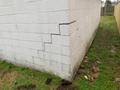
Any type of home damage is concerning, but signs of foundation settlement and sinking can be terrifying.
A settling foundation means your home’s structural stability and your family’s safety could be in danger. That’s why it’s important to stay alert to your home’s condition – frequently checking for visible symptoms – and fixing any problems as soon as they arise.
Let’s explore the five most common signs of foundation settlement you’ll likely notice around your home. We’ll also delve into the causes behind these issues and how local foundation repair professionals can help you repair and protect your foundation.
How To Know If Your Foundation Is Settling
As a homeowner, you likely have a lot on your plate. But it’s important to know what problems to look for that could point to severe damage. The sooner you spot anything wrong in your home, the easier it may be to fix. Otherwise, the damage continues and leads to additional problems, expensive repairs, and significant safety hazards.
Here are the most common signs of foundation settlement:
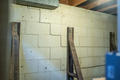
1. Stair-step Cracking
There are various types of wall cracks, including ones that follow a stair-step pattern. This typical sign of foundation settlement is common in brick and concrete block walls. The cracks may widen as a home continues to settle, and this indicates that the wall is rotating outward.
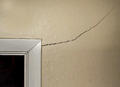
2. Drywall Cracks and Nail Pops
Diagonal cracks in your drywall are often seen extending from the corners of doors and windows inside the home. They also may be more obvious on the upper floors of your house. Circular nail pops may also become visible as the foundation shifts.
3. Separation of Doors and Windows from Framing
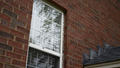
If your home is settling, you may notice that there are cracks between the wall and your doors or windows. This separation shows that the foundation has shifted from the position it was in when those doors and windows were installed.
4. Doors and Windows Sticking
In the same vein, you may also notice that doors and windows stick or are more difficult to open and close than usual. This can be a sign that your walls and door or frames are no longer level, so the fixtures don’t exactly fit anymore.

5. Chimney Separation
Sometimes, homeowners notice that their chimneys have begun to crack and separate from the rest of the home. This happens because chimneys are often built on a different foundation than the rest of the house – this makes it more at risk for settlement. A leaning chimney is one of the more dramatic signs of settlement, but it can be extremely dangerous, especially if the chimney collapses.
Why Your Foundation Is Settling
The causes of foundation settlement can depend on various factors, but the soil underneath and around your home is typically at the heart of the problem. Your home moves or shifts when the soil underneath can no longer support its weight. Here’s a look at what could be happening with your property’s soil:
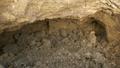
- Soil Type: While many soil types exist throughout Central and Southern Ohio, the majority of our region’s soil is made up of primarily silt and clay elements. Silt is prone to erosion, and clay-based soils are highly expansive.
- Exposure to Moisture: Wetting and softening of soil are other causes of settlement. If there is a heavy rain or flood or your downspout drains directly next to your home, the soil around it will become soft and muddy, and the structure may begin to sink. This is most problematic with clay soil, which expands when wet and shrinks and cracks when it dries out.
- Invasive Tree Roots: Trees with long, aggressively growing roots that extend under a home can also suck moisture out of the soil, and drought will have the same effect.
- Building Practices: It is also common to create flat, level lots to build houses on. Home builders often remove soil from hills and fill it into valleys to create these lots. If this soil is not compacted well, it can become more compacted under the weight of a home and cause it to sink and shift.
How to Repair a Settling Foundation
Properly addressing foundation settlement and its root causes can be tricky. However, our team of experts at Ohio Basement Authority has years of experience dealing with our area’s problematic soils and the issues they create. We also have the best tools that will permanently repair and protect your home.
Foundation settlement is typically repaired using pier systems, also known as underpinning. Our team uses two types of foundation piers:
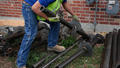
- Push Piers: Push piers are steel piers driven deep into the soil to the bedrock or stable soil layer below. Push piers can be installed from the exterior or interior of a home and can provide an opportunity to lift the home back to its original position. This often closes cracks and improves the operation of doors and windows that were sticking before.
- Helical Piers: Helical piers are also steel piers, but they have round, helical blades on the ends and are screwed into the ground to lift and stabilize a house and stop foundation cracks. This is typically a solution for lighter structures.
There are also other forms of foundation failure other than settlement – sagging floors above crawl spaces and wall failure. We have products to repair these foundation issues as well, including crawl space support posts, wall anchors, wall beams, and wall reinforcements.
Fix Foundation Settlement the Right Way with OBA
A settling foundation is a hazard to your family and home. Don’t let it get out of hand and result in an unsafe living environment. Keep your eyes peeled for any sign of trouble, and reach out to the pros right away for reliable assistance. Contact our team at Ohio Basement Authority today to schedule your free inspection and estimate. We have been helping homeowners throughout Central and Southern Ohio fix and repair their homes for nearly 15 years. We’re eager to help you, as well!

Holly Richards-Purpura
Publish Date:
Last Modified Date:
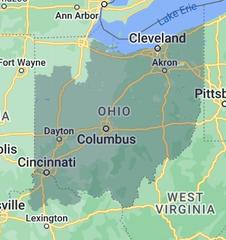
Our Locations
429 Portage Blvd
Kent, OH 44240
1270 Hillsmith Dr.
Cincinnati, OH 45215
7950 Bavaria Rd.
Twinsburg, OH 44087
2421 McGaw Rd.
Obetz, OH 43207
70 Birch Alley, Suite 240
Beavercreek, OH, 45440
5650 Blazer Memorial Pkwy, #124
Dublin, OH 43017