
How Mold Grows on Concrete and How to Prevent It
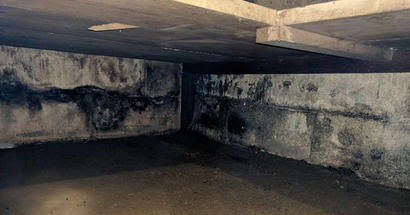
Mold is a common problem in homes throughout Central and Southern Ohio, growing in basements, crawl spaces, bathrooms, kitchens, and other areas you may see or not see.
This growth is not always toxic, but it can pose health threats and undermine your home’s structural integrity. It can sprout on many materials, including concrete.
In this article, we’ll cover how mold grows, its impact on your concrete foundation, and how foundation repair professionals can help you address the issue for good.
The Facts About Mold Growth
Believe it or not, mold is an essential part of the natural environment.
Mold breaks down organic materials to make room for new growth. In our ecosystem, mold often accumulates on dead trees, decomposing plants, animal carcasses, and more. This accumulation deteriorates non-essential matter, thus making room for new life.
However, although helpful mold is found in nature, it can be destructive to your home.
What Does Mold Need to Grow?
There are various factors that contribute to the natural growth of mold.
Primarily, mold needs oxygen to grow. Therefore, mold will not grow underwater or in sealed containers.
Temperature also plays a key role in the development of mold. Temperatures that are favorable for humans are also favorable to mold. For mold to spread and reproduce, temperatures must range between 40°F and 120°F. When temperatures fluctuate above or below this range, mold becomes dormant.
Not only does mold need oxygen and adequate temperatures to survive, but it also needs a food source, just like we do. While mold only feeds on organic materials, it can grow on any surface, especially concrete. While concrete may not supply an abundance of organic material, it provides just enough mold to spread to other areas of a building.
How Exactly Does Mold Grow on Concrete?
It’s true that mold may not find enough nourishment on concrete alone. However, it can feed on pollen, moisture, algae, bacteria, dirt, and other particles that commonly gather on concrete. Mold produces an acid that can deteriorate concrete. This acid causes the concrete material to become more porous and absorbent, which allows for further accumulation of moisture and other particles. The presence of mold on concrete creates an endless cycle that is perfect for both the growth and spread of mold.
How to Address Mold on Concrete
Preventing Mold Growth

To avoid the effects that mold growth can have on the structural integrity of a building, or the implications it can have on your health, it is wise to take the proper steps to prevent mold growth in the first place.
The best way to prevent mold growth is in the beginning stages of construction. Implement natural ventilation to allow wet construction materials to dry. You can also use protective barriers and water-resistant materials that will help prevent mold growth.
It is also imperative to be mindful of the order in which different elements are installed in a building. For instance, drywall should never be installed near wet concrete. This is an open invitation for mold growth.
It is also important to understand that, when construction ends, dehumidifiers and temperature controls are used to ensure proper temperature and maintain adequate humidity levels.
Finding a local foundation and waterproofing expert will also prove to be helpful in preventing mold growth on concrete. Our team at Ohio Basement Authority can help you protect your home with basement waterproofing or crawl space encapsulation solutions like dehumidifiers and vapor barriers. These reliable measures control moisture and eliminate mold growth conditions.
Removing Mold Growth
Removing mold growth from concrete is a relatively straightforward process. Unlike sheetrock, you don’t need to concern yourself with damaging any underlying material. If the area in which mold has formed is relatively large, it is best to rely on a professional technician to remove the abundance of mold.
Do You Need Assistance From a Professional?
Ohio Basement Authority has been helping homeowners with mold prevention and water management services for over a decade. Our experts are professionals who take immense pride in lending a helping hand to our local community members.
If you have a mold problem or would like to be proactive in preventing the accumulation of mold in or around your home, contact us today to schedule a free inspection!

Holly Richards-Purpura
Publish Date:
Last Modified Date:
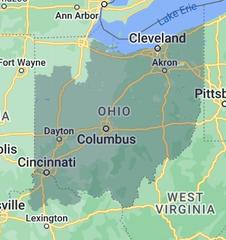
Our Locations
429 Portage Blvd
Kent, OH 44240
1270 Hillsmith Dr.
Cincinnati, OH 45215
7950 Bavaria Rd.
Twinsburg, OH 44087
2421 McGaw Rd.
Obetz, OH 43207
70 Birch Alley, Suite 240
Beavercreek, OH, 45440
5650 Blazer Memorial Pkwy, #124
Dublin, OH 43017